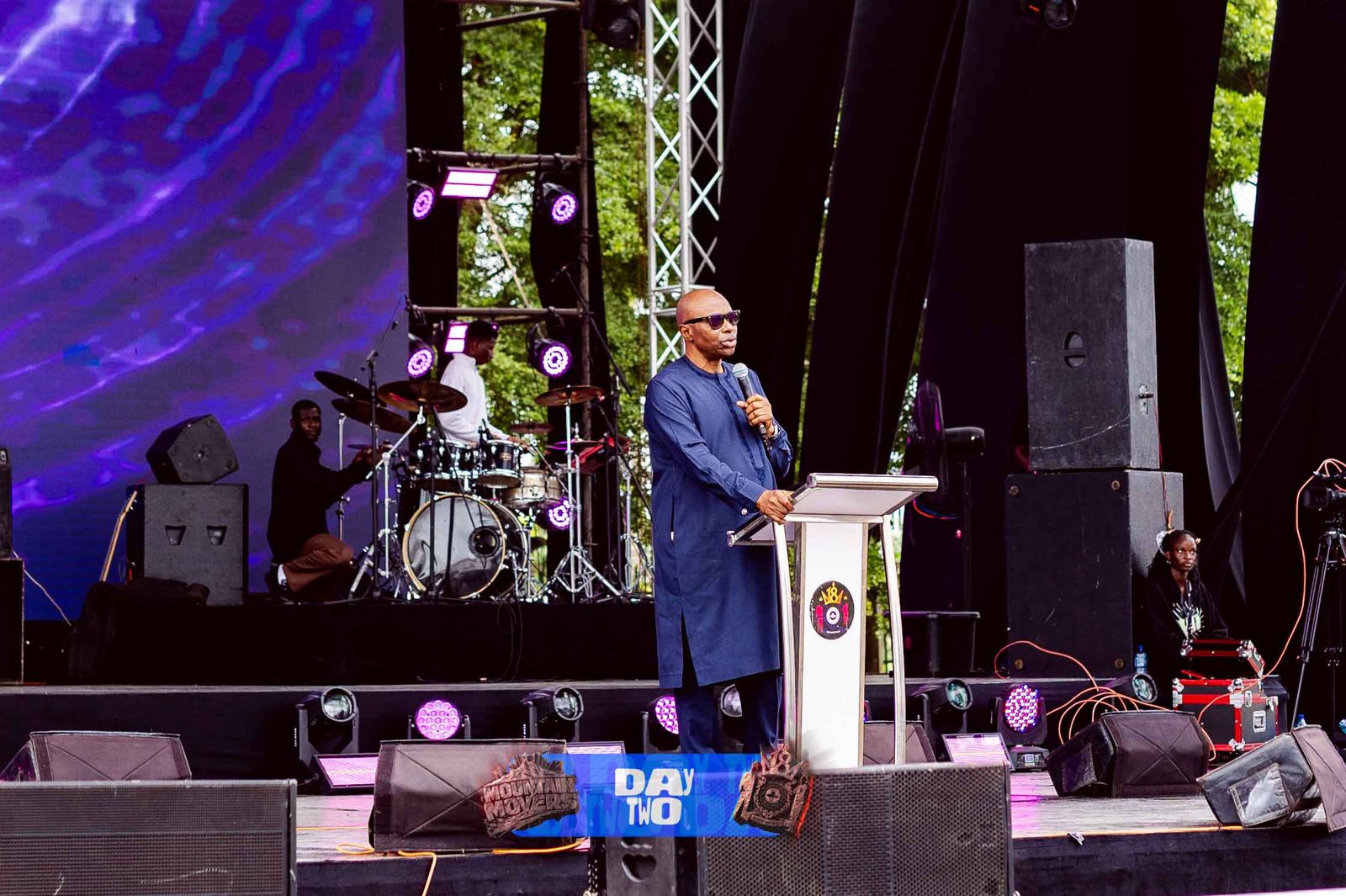
Former Ondo State Governor, Dr. Olusegun Mimiko, has advocated the adoption of the biblical “Jethro Principle” as a practical blueprint for addressing Nigeria’s governance challenges, arguing that devolving authority and resources is essential for effective leadership, accountability and national development.
Speaking on Tuesday at the Pastors' Seed Event during the 74th Annual Convention of the Redeemed Christian Church of God (RCCG), themed "Mountain Movers," Mimiko said Nigeria's highly centralised governance structure has become increasingly inefficient and should give way to a system that empowers leaders closer to the people.
Delivering a lecture titled "The Government and Politics Mountain," the former governor drew inspiration from Exodus 18, where Moses, overwhelmed by the burden of leading millions of Israelites, received wise counsel from his father-in-law, Jethro, to delegate responsibilities to capable leaders.
According to Mimiko, the biblical model remains relevant for modern governance.
"The Jethro Principle teaches us that effective governance must be built on merit, capacity and capability," he said.
He explained that authority and responsibility should be decentralised so that local challenges are addressed at the grassroots, while only matters of national importance are handled by the central government.
"That is the foundation of true federalism," he added.
While acknowledging ongoing efforts by the administration of President Bola Ahmed Tinubu to decentralise policing, resource management and decision-making, Mimiko described the Jethro model as a more comprehensive framework for tackling Nigeria's structural governance problems.
He argued that excessive concentration of power at the centre has contributed significantly to what he described as Nigeria's five major political challenges—ethnic divisions, corruption, insecurity, poverty and poor leadership.
"A centralised government cannot effectively manage a multi-ethnic, multicultural and multi-religious nation like Nigeria," he said. "Leaders closest to the people should be empowered to solve problems closest to the people."
Addressing a congregation that included many young people, Mimiko urged Christians and Nigerians of all faiths to become active participants in politics rather than viewing governance as an arena to avoid.
According to him, politics is far more than the struggle for political office.
"Politics is the process through which authority is exercised for the common good, while government is the institution that applies that authority to organise society," he said.
He stressed that public policies directly affect the quality of life of citizens through education, security, employment, healthcare and religious freedom, making political participation a moral responsibility for people of faith.
Drawing from biblical teachings, Mimiko said God's expectation is that leaders administer justice, protect the vulnerable and govern as faithful stewards.
He cited the Good Samaritan as an example of compassionate leadership without prejudice, while highlighting Nehemiah, Joseph and Daniel as biblical figures who demonstrated integrity, competence and transformational leadership in government.
Beyond the Bible, he referenced British abolitionist William Wilberforce and South African cleric Desmond Tutu as examples of individuals whose faith inspired them to influence public policy and societal change.
"They demonstrated that faith should redeem power rather than retreat from it," he said.
Mimiko challenged young professionals—including accountants, lawyers, teachers, technologists and pastors—to regard politics as a calling to serve rather than a dirty enterprise to avoid.
"Joseph, Daniel and Nehemiah did not run from the secular mountain. They climbed it. They didn't wait for governance to become Christian; they brought divine wisdom into the halls of power and transformed society," he said.
He also cautioned against leaving governance solely in the hands of others.
"We cannot pray for God to bless our nation on Sunday and then abandon the seats of power on Monday," he declared, warning that when responsible citizens stay away from public service, less competent individuals inevitably fill the vacuum.
Mimiko concluded by stressing that political power should never be pursued for personal gain but as a vehicle for justice, equity and national transformation.
"The goal is not power for power's sake. The goal is a nation where righteousness exalts the people."
He urged Nigerians to complement prayers with responsible civic participation in the collective quest for national renewal.